Estrogen Cream on Face: Is It Safe? | MAUD Calgary
Can You Put Estrogen Cream on Your Face? What Women Should Know
Estrogen cream for wrinkles, collagen and aging skin is gaining attention on TikTok and social media. But is it safe, does it work, and what does the research actually tell us?
As women move through perimenopause and menopause, changes in their skin can become increasingly noticeable. Dryness, fine lines, reduced firmness and changes in texture may appear even when their skincare routine hasn't changed.
Now, a new conversation is gaining momentum: Can applying estrogen cream to your face help reverse some of these changes?
Physicians, including menopause specialist Dr. Mary Claire Haver, have publicly discussed topical estrogen for facial aging. Videos circulating on TikTok, Instagram and YouTube have prompted women to ask whether the same estrogen creams prescribed for vaginal dryness could also benefit facial skin.
It's an understandable question, and one worth discussing.
At MAUD Medical Clinic in Calgary, we believe women deserve access to accurate, evidence-informed information about their changing bodies.
Our position is that there is not yet enough high-quality evidence to recommend using prescription vaginal estrogen cream on the face for cosmetic purposes. Facial application is an off-label use, and women should speak with their prescribing physician before considering it.
Let's look at what we know, what remains uncertain, and what other options are available for maintaining skin health during menopause.
Why Does Skin Change During Menopause?
Estrogen plays an important role in maintaining healthy skin.
It influences several processes, including:
Collagen production: Collagen helps provide skin with structure and firmness.
Skin thickness: Declining estrogen can contribute to thinner, more fragile skin.
Hydration: Hormonal changes may affect moisture retention and the skin barrier.
Elasticity: Changes in collagen and elastin can contribute to fine lines and reduced firmness.
Skin repair: Estrogen influences wound healing and tissue maintenance.
As estrogen levels decline during menopause, some women notice their skin becoming drier, thinner or less resilient.
However, hormones aren't the only factor. Genetics, sun exposure, smoking, nutrition, skincare habits and natural aging all influence skin appearance.
Read more about menopause-related skin changes at MAUD.
Why Are Women Putting Estrogen Cream on Their Faces?
Much of the recent interest comes from social media discussions about topical estrogen and collagen.
Dr. Mary Claire Haver, a prominent menopause educator and OB-GYN, has spoken publicly about applying estrogen preparations to facial skin and the potential benefits for skin aging.
Her discussions have helped bring attention to an area of women's health that has historically received relatively little research.
But it's important to distinguish between three different uses of estrogen:
Systemic menopausal hormone therapy: Estrogen prescribed to treat appropriate menopause symptoms throughout the body.
Low-dose vaginal estrogen: An established treatment for certain vaginal and urinary symptoms associated with menopause.
Topical estrogen applied to the face: An emerging cosmetic practice with limited evidence about effectiveness, dosing and long-term safety.
Evidence supporting one use does not automatically establish the safety or effectiveness of another.
Watch the discussion
Dr. Mary Claire Haver discusses vaginal estrogen cream and facial skin
Watch Dr. Haver's interview with Katie Couric on YouTube
What Estrogen Does to Your Skin (And What Actually Works)
Listen to Dr. Haver's conversation with plastic surgeon Dr. Tony Youn
These discussions are provided for education and to illustrate the public conversation. They should not be interpreted as medical recommendations from MAUD.
What Does the Scientific Evidence Actually Say?
There is a biological reason researchers are interested in topical estrogen for aging skin.
Estrogen receptors are present in skin, and laboratory and clinical research has examined whether applying estrogen locally may influence collagen, skin thickness and elasticity.
What research suggests
Some small studies have reported:
Increased collagen-related activity in skin tissue
Improvements in certain measurements of skin thickness
Changes in skin hydration and elasticity
Potential benefits for selected features of skin aging
A systematic review published in the Journal of the American Academy of Dermatology in January 2026 examined the available evidence on topical estrogen for skin aging.
A separate 2026 review, Topical Estrogen Therapy for Aging Skin: Current Evidence and Clinical Considerations, reported promising changes in collagen and skin structure, but emphasized that improvements in visible appearance remain uncertain.
What we still don't know
Important questions remain unanswered:
1. Does it noticeably reduce wrinkles?
Changes measured in skin tissue do not necessarily translate into visible improvements in wrinkles, firmness or facial appearance.
2. How much estrogen is absorbed?
Absorption may depend on the formulation, concentration, application area, skin condition and frequency of use. The hormonal effects of repeated facial application have not been adequately established.
3. Is long-term use safe?
There is insufficient long-term research evaluating breast and endometrial safety, systemic hormonal effects and other potential risks when estrogen preparations are used cosmetically on facial skin.
4. Could it worsen pigmentation?
Estrogen can influence pigmentation pathways. Some experts have raised concerns about melasma and visible blood vessels, particularly in sun-damaged skin.
5. Which formulation and dose would be appropriate?
Research has involved different estrogen types, concentrations and preparations. There is no well-established, standardized facial estrogen regimen supported by robust long-term clinical trials.
The bottom line: Early research is interesting, but it is not enough to establish routine facial estrogen use as a proven anti-aging treatment.
Is It Safe to Use Vaginal Estrogen Cream on Your Face?
At this time, MAUD Medical Clinic does not recommend applying prescription vaginal estrogen cream to the face for cosmetic anti-aging purposes.
In Canada, prescription vaginal estrogen products are authorized for specified medical indications, not facial wrinkle reduction or cosmetic skin rejuvenation.
Using a medication outside its authorized indication is called off-label use.
Off-label prescribing is not automatically inappropriate. Physicians may prescribe medications off-label when they determine that the available evidence, clinical circumstances and potential benefits justify doing so.
However, off-label use should involve informed medical decision-making, not simply following a social media trend.
Women should not change how they use their prescribed estrogen, mix it into facial moisturizer, or apply it to additional areas without first discussing this with their prescribing physician.
This is especially important for anyone with a history of hormone-sensitive conditions, unexplained vaginal bleeding, or other medical considerations affecting hormone therapy.
Important distinction: Vaginal estrogen is not the problem
Low-dose vaginal estrogen is an evidence-supported treatment for genitourinary syndrome of menopause (GSM), which may cause vaginal dryness, irritation, painful intimacy and certain urinary symptoms.
When appropriately prescribed and used for its intended purpose, it has a well-established role in menopause care.
The uncertainty discussed here concerns using estrogen preparations on facial skin for cosmetic purposes, not appropriately prescribed vaginal estrogen treatment.
What Can Women Do About Aging Skin During Menopause?
There are several better-studied approaches to improving skin appearance and supporting long-term skin health.
1. Daily sun protection
Broad-spectrum sunscreen, ideally SPF 30 or higher, helps protect against ultraviolet damage that contributes to wrinkles, pigmentation and collagen breakdown.
2. Evidence-based skincare
Depending on skin type and tolerance, skincare may include:
Retinoids, which have evidence for improving certain signs of photoaging
Moisturizers containing ceramides, glycerin or hyaluronic acid
Vitamin C or other suitable antioxidant products
Gentle skincare that supports the skin barrier
Prescription retinoids are not suitable for everyone and should be discussed with a qualified healthcare professional.
3. Medical assessment when appropriate
If skin changes occur alongside hot flashes, sleep disruption, vaginal dryness or other menopause symptoms, a menopause consultation may help identify appropriate care.
Menopausal hormone therapy may be recommended for established medical indications, but should not be initiated solely as a cosmetic anti-aging treatment.
4. Professional skin treatments
For women interested in addressing fine lines, uneven texture, pigmentation or skin laxity, professionally administered aesthetic treatments may be appropriate.
Laser-based treatments can target specific skin concerns using controlled energy to support skin resurfacing or collagen remodelling.
These treatments have different mechanisms, benefits and risks from topical estrogen, and suitability depends on an individual assessment.
Explore Fotona Laser Skin Treatments at MAUD Medical Clinic
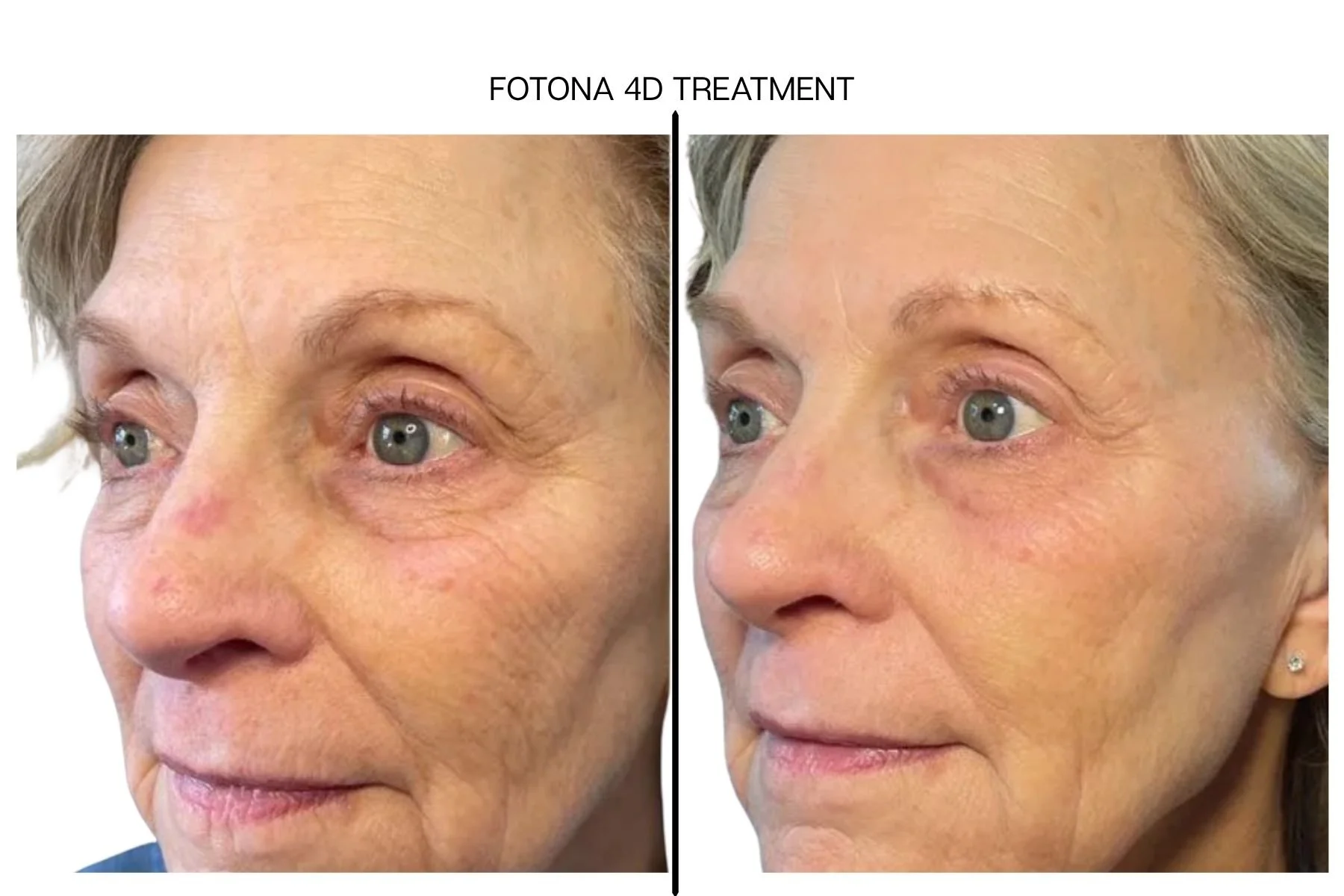
At MAUD Medical Clinic in Calgary, we offer advanced Fotona laser treatments designed to address a range of skin concerns, including those that become more noticeable during perimenopause and menopause.
Our approach focuses on skin quality, natural-looking results and individualized treatment planning, rather than promising to stop or reverse aging.
Depending on your skin and goals, treatment options may include:
Fotona 4D Facial Rejuvenation
A multi-step laser treatment approach designed to address selected concerns involving fine lines, skin texture and facial firmness.
Fotona VectorLift
A laser-based treatment option focused on selected concerns around the eyes and upper face, including fine lines and skin laxity.
MAUD Laser Glow
A skin-focused laser treatment designed to improve the appearance of selected concerns involving texture, tone and overall skin quality.
Laser Skin Resurfacing
For appropriate candidates, laser resurfacing may help improve the appearance of fine lines, rough texture, uneven pigmentation and certain scars.
Laser treatment is not suitable for everyone. Potential risks include redness, swelling, pigment changes, burns and scarring. More intensive treatments may require downtime, and people with darker skin tones or a history of pigmentation concerns require careful treatment selection.
Individual results vary, and some concerns may require multiple treatments.
Not Sure Which Treatment Is Right for You?
You don't need to choose a laser treatment before your consultation.
At MAUD, we'll discuss your concerns, assess your skin and explain which options may be appropriate.
Laser Skin & Body Consultation: $100
Your consultation fee can be applied toward your treatment.
BOOK YOUR LASER SKIN CONSULTATION
Explore MAUD's Laser Skin, Hair & Body Treatments
Menopause Care Is About More Than Appearance
While changes in skin are often among the most visible signs of aging, menopause can affect many aspects of physical, sexual and emotional well-being.
MAUD Medical Clinic supports women through perimenopause, menopause and beyond with services including:
Publicly funded physician menopause consultations
Vaginal health assessments and treatment
Pelvic floor physiotherapy
Pessary fitting and care
Sexual health counselling
Menopause education and individualized treatment planning
Our goal is to help women understand their options and make informed decisions about their health.
Explore Menopause Care at MAUD
The Takeaway: Stay Curious, but Follow the Evidence
The conversation about estrogen cream and facial aging raises important questions about menopause, skin health and the need for more research focused on women.
We welcome those conversations.
There may be future developments in topical estrogen skincare, and ongoing research could help clarify its potential benefits and risks.
For now, however, there is not enough high-quality evidence to recommend using vaginal estrogen cream on the face as an anti-aging treatment.
If you're considering it, speak with your physician first.
And if your goal is to improve skin texture, fine lines or firmness during menopause, MAUD offers professional skin assessments and laser treatment options to help you explore an individualized approach.
BOOK A SKIN CONSULTATION AT MAUD
References & Further Reading
Farkas E, et al. (2026). Topical estrogen for skin aging: A systematic review of safety and efficacy. Journal of the American Academy of Dermatology. View on PubMed
Topical Estrogen Therapy for Aging Skin: Current Evidence and Clinical Considerations. (2026). Read the scientific review
University of Colorado Anschutz Medical Campus. (2026). Can Vaginal Estrogen Cream Erase Signs of Aging on Your Face? Read the expert discussion
George Washington University School of Medicine and Health Sciences. (2026). Vaginal estrogen as a face filler? Experts critique the new skincare trend. Read the article
Dr. Mary Claire Haver. (2026). What Estrogen Does to Your Skin (And What Actually Works). Listen to the discussion
Katie Couric interview with Dr. Mary Claire Haver. (2025). You Can Use Your Vaginal Estrogen Cream on Your Face. Watch on YouTube
Medical Disclaimer
This article is provided by MAUD Medical Clinic for general educational and informational purposes only. It does not constitute medical advice, diagnosis or treatment and should not replace consultation with a qualified healthcare professional.
Do not start, stop, change the dose of, or alter the application of any prescription hormone medication without consulting your prescribing physician. Treatments should be selected based on individual medical history, clinical assessment, risks and benefits.
MAUD Medical Clinic does not recommend off-label facial application of vaginal estrogen for cosmetic purposes based on currently available evidence.